
Below is a an updated post from 2020. that applies to AI implementation issues today.
The original post was about how companies were converting to agile processes and the issues that were created.
We see some of the same things happening with AI. As an experiment, I changed instances of the word “agile” in the 2020 post to “AI” … and it was almost a perfect fit, needing only a few changes.
Beyond increasing reports of recalls and compliance issues (even in operating room use), AI can cause internal company turbulence limiting benefits.
The message is parallel: don’t assume that just inserting AI to do “work” will generate the results you desire.
Updated post:
“AI” remains a hot topic in general, and “compliant AI” is a goal in many medical (and other regulated) companies.
However, effective and compliant AI also remains elusive for many reasons.
This article will examine one of the most common hurdles to achieving full AI benefits from well-intentioned initiatives.
First, let’s address AI and medical device development in general. The most common question (and derivatives) we get regarding AI are:
- Can we use AI in medical device software development?
- Can it be compliant?
- Can it be safe?
- Is it a wise thing for us to do?
The short answer is “yes” for the first three. It is also “yes – at least start investigating” for the fourth.
The next most common question we get is “Can’t we just plug AI into part of our process and succeed with AI?”
The short answer is “no, in most cases.”
Why?
Every organization, and every level in an organization, effectiveness can be evaluated across four factors illustrated in the quadrants of the diagram below.
Optimal Business Success Model™
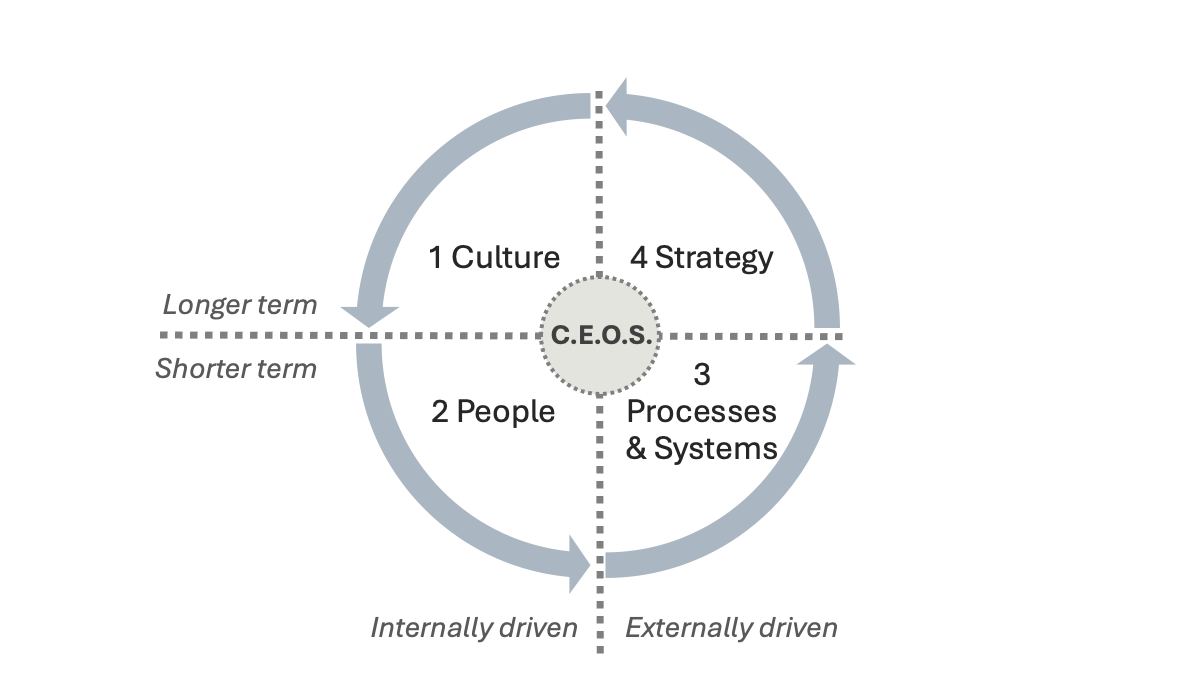
As the name implies, optimal business success occurs when all four quadrants or factors are functioning optimally. The four factors also interact and are dependent on each other, so a major change in one area can affect one or more of the others.
Applying to AI implementation issues
Using the model as a foundation, the question can be rephrased as “Can we just change a part of the Processes & Systems factor? The answer is usually “no” because AI if more than just a process change. Just changing a process here and there will create other AI implementation issues.
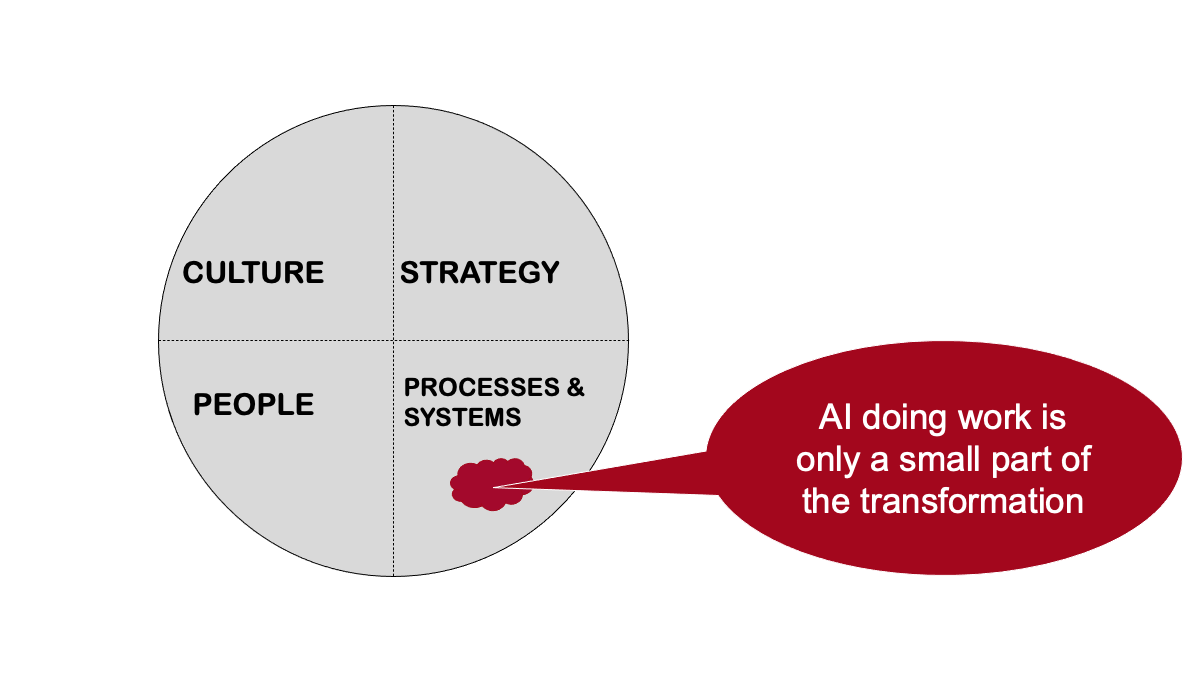
Transitioning to AI has many challenging aspects … an “off the shelf” “plug and play” is unlikely to work for most medical device companies. While AI does imply process changes, there are also changes usually needed around:
- culture (AI will generate fear)
- people (e.g., different competencies, roles, and effects of substituting AI for people)
- other processes beyond device development (e.g., financial planning, performance management, marketing)
- strategy (e.g., product release cycles)
Therefore, your AI success and how you achieve it will necessarily involve other parts of your organization. We have found that the most successful implementations have one or more of these key attributes:
- Senior executive sponsorship and commitment
- Critical mass culture change across three or more functional groups
- Desperation – general knowledge that company will fail without change
- Hopelessly committed to customer satisfaction
The benefits associated with AI are clear and have been demonstrated in both regulated and non-regulated environments. Unfortunately, the hurdles are also clear and have been encountered by those struggling to achieve the benefits.
If you or your organization has been struggling with AI implementation issues, look at what changes you are making. Have you sufficiently addressed all four optimal business performance factors?
